Black Cat Pirates in One Piece Live-Action: Kuro, Jango & Anime Differences
Shikhar Jauhari
August 21, 2026
Netflix’s One Piece live-action makes significant changes to the Syrup Village arc: Jango the hypnotist who drives the original scheme is cut to a wanted-poster cameo; Sham and Buchi are repositioned as undercover mansion staff; and Kuro’s plan to seize Kaya’s fortune is reworked around a poisoned soup subplot rather than hypnotic manipulation. Alexander Maniatis delivers a quietly menacing Kuro, and the arc holds together better than it has any right to given those changes. But cutting Jango costs the adaptation more than it probably intended.
The Syrup Village arc, centered on the Black Cat Pirates and their disgraced captain Kuro, is supposed to create a specific kind of tension. It’s slower than the Orange Town saga. It lingers. Kuro, disguised as the mild-mannered butler Klahadore, is the kind of villain who works because you’re never sure when he’s going to snap.
In the anime, the Black Cat Pirates’ plan is a layered con: a hypnotist controlling events from the shadows, two cat-themed ship guards waiting in the wings, and a captain who has spent three years playing a different person entirely. The live-action has to do all of this without Jango, with a smaller crew, and with a reworked scheme and how it handles that matters.
The adaptation gets some of it right—more than I expected. But the choices that strip the Black Cat Pirates down also strip away what made them distinctive as a crew, not just obstacles for Luffy to punch through, but a genuinely strange group operating with their own internal logic.
Kuro / Klahadore: What Alexander Maniatis Gets Right (and the Traps He Avoids)
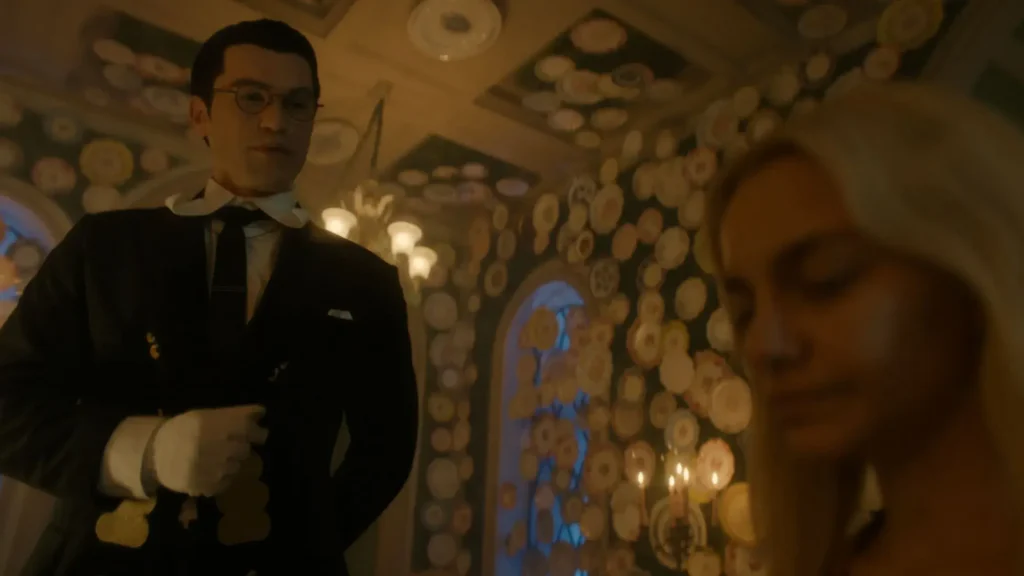
Kuro is a hard character to translate. In the anime, he’s theatrical in a way that borders on camp: the slow hands, the glasses adjusted with the palm rather than the fingers (a habit that conceals how sharp his Cat Claws are), the long speeches. That version works in animation because the medium can stretch those beats without losing momentum. In live-action, the same approach risks tipping into parody.
Maniatis mostly sidesteps that trap. His Klahadore is cold and controlled, a man who has spent three years perfecting a performance and resents every second of it. There’s a moment, easy to blink past, where Luffy’s rudeness at the dinner table causes Kuro to grip the back of a chair just a half-second too long. He doesn’t raise his voice. He doesn’t need to. Maniatis lets the composure crack just enough to show what’s underneath: something very still and very dangerous, before the butler’s smile slides back into place. That’s the version of the character the show needed, and Maniatis commits, even when the writing doesn’t always give him room to breathe.
The dual identity reads as genuinely separate. Klahadore, the devoted, slightly condescending butler, feels distinct from the Kuro who shows up in the climax as a performance within a performance, which is exactly what the character is.
Where it stumbles is the transition into the action climax. The show spends so much time in the quiet, watchful Klahadore mode that when Kuro finally drops the persona, the fight arrives before the dramatic pressure has fully released. There’s no breath between the mask coming off and the violence starting, no moment where the weight of three years registers onscreen. The Gum-Gum Bell resolves things cleanly, but the transition robs the confrontation of the catharsis it should have had.
Sham and Buchi: The Nyaban Brothers Get an Upgrade (Sort Of)
This is one of the more interesting creative decisions the adaptation makes. In the anime and manga, Sham and Buchi are ship guards; they stay with the Bezan Black while the rest of the crew is ashore, and Jango only calls them in when the battle escalates beyond what he can manage. They have no presence in the Kaya household at all.
The live-action repositions them entirely. Sham works as a maid; Buchi poses as a cook. Without Jango coordinating the scheme remotely, the show needs the crew embedded closer to the action. It also means the poisoning subplot has someone inside the kitchen to execute it.
The problem is the show never makes them feel dangerous in those roles. They move dishes and stand near doorways, competent background figures, not coiled threats. No scene does for Sham or Buchi what the chair-grip moment does for Kuro: nothing that signals these two have been restraining something behind the apron and the cook’s hat.
So when they drop the disguises and face Zoro, the reveal lands as a plot beat rather than a payoff. The fight that follows is well-staged. Sham’s theft of the Wado Ichimonji is a clever bit, but the tension it’s supposed to release was never built. Their chemistry as a unit survives the translation, at least. The Nyaban Brothers are supposed to be two halves of a single weird personality, and the live-action preserves that dynamic even if it undersells everything around it.
The Missing Jango Problem in One Piece Live-Action
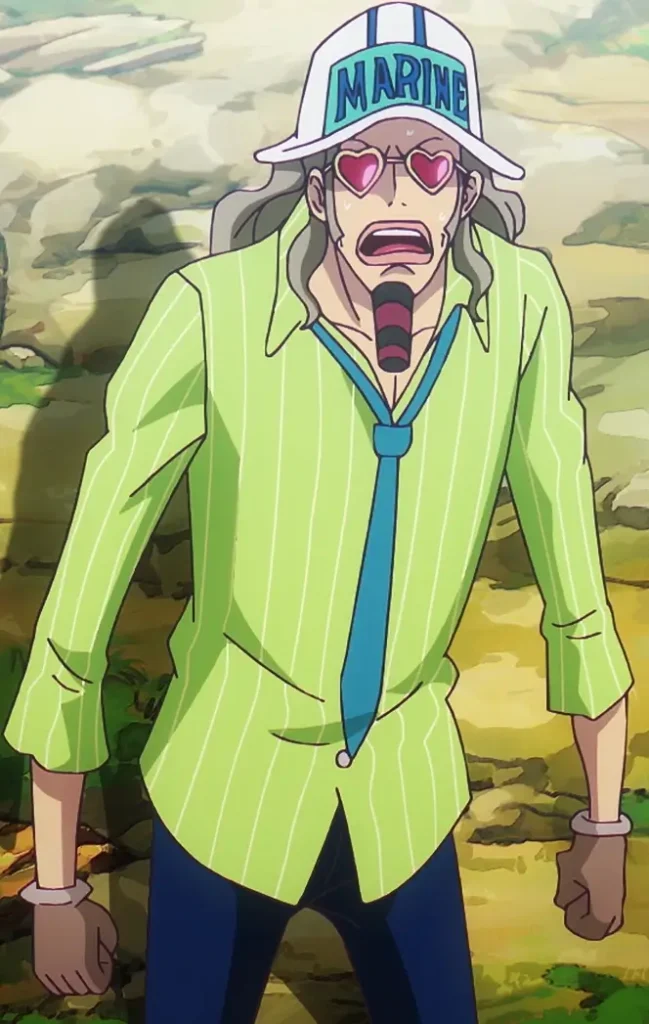
Jango, hypnotist, showman, the operational heart of the Black Cat Pirates’ plan, is reduced to a cameo on a wanted poster. His entire function in the arc, which is substantial, gets redistributed or dropped.
In the anime and manga, Jango serves two specific functions. First, he hypnotizes Kaya directly, compelling her to sign over her estate to “Klahadore” in her will, giving Kuro legal claim to her fortune without anyone questioning why a grieving girl left everything to her butler.
Second, he hypnotizes the Black Cat Pirates before the final assault, pushing the crew into a physical frenzy that briefly makes them near-unstoppable. These aren’t background details; they’re the load-bearing mechanics of the whole scheme. Remove them, and Kuro’s plan stops being a layered con and becomes a straightforward murder plot.
The original arc’s menace comes precisely from that psychological dimension: the idea that Kaya’s own mind is being used as a weapon against her, that the people she trusts are instruments of her manipulation. The live-action replaces both functions with a poisoned soup subplot: Buchi prepares a doctored dish designed to keep Kaya too ill to act, and the plan pivots toward assassination rather than inheritance fraud.
It works as a narrative device, but the thematic shift matters. Poison puts Kaya in danger. Hypnosis makes her complicit in her own destruction without her knowledge. That’s a meaningfully different kind of horror, and the live-action gives it up without quite replacing what it loses.
The Marine deception scene is a related change worth noting. In the anime and manga, the Black Cat Pirates never impersonate authorities; their cover relies entirely on Kuro’s alias, not on active infiltration. The live-action adds a sequence where the crew deceives a Marine group directly. The intent seems to be giving the broader crew something active to do before the final assault. But it nudges the arc away from the original’s quieter threat: the unsettling sense that Kuro’s real weapon was always patience and performance, not tactics or numbers.
What the One Piece Live-Action Syrup Village Arc Actually Gets Right
The first half of this arc is the show at its most confident. Rather than rushing to establish Klahadore as a threat, the adaptation lets him function as a convincing butler first fussy, condescending, plausible. The reveal lands harder because the audience has spent real time watching him manage Kaya’s household with the practiced ease of someone who has rehearsed this life for three years. When Usopp tries to warn the village, and no one believes him, it works structurally: Klahadore is too consistent to doubt, and Usopp is too unreliable to trust. Neither could be true without the other, and the show knows it.
Usopp benefits more from this arc than any character besides Kuro himself. His opening showing up at Kaya’s gate, spinning tall tales to make a sick girl laugh, tells you everything about who he is before the plot needs him to be brave. When he tries to warn the village, the show plays it not as comedy but as the specific humiliation of someone who has cried wolf his whole life and is finally telling the truth, with everything on the line. That makes his eventual stand, dragging an injured leg across the hillside to protect Kaya and the kids, feel earned rather than obligatory.
Kuro’s confrontation with his own crew is one of the few moments the live-action genuinely nails. In the anime and manga, Kuro’s berserker Shakushi attack is deliberately indiscriminate; he tears through his own crew alongside his enemies, and the Black Cat Pirates end up cheering for Luffy to stop him.
The detail matters: it confirms the crew follows Kuro out of fear, not loyalty, and that he has always seen them as expendable. The live-action doesn’t flinch from that. When Kuro turns on his crew, there’s no hesitation, just the cold efficiency of someone disposing of loose ends. It’s the moment that clarifies the butler act was never just a disguise for Klahadore’s identity. It was a disguise for his contempt.
The back half’s pacing is a separate problem. Once Kuro drops the Klahadore act, the show loses its rhythm. The mansion chase runs longer than its dramatic content can support: Nami, Usopp, and Kaya move through corridors, Kuro pursues, and the sequence restates the threat without escalating it. For an arc that built its dread through stillness, that’s a costly way to spend the climax.
What the Syrup Village Arc Means for the in One Piece Live-Action Season
The Black Cat Pirates arc does something the show needed: it slows down long enough to establish that the world has real stakes. The East Blue saga in the anime moves through smaller, more personal conflicts before the scale expands, and the live-action respects that pacing enough to make Syrup Village feel like more than a detour.
Kuro survives the adaptation. The Black Cat Pirates don’t, not really. What made them distinctive as a crew was never just the cat-themed gloves or the ship full of grunts; it was the specific combination of Kuro’s patience, Jango’s psychological reach, and Sham and Buchi’s coiled menace.
The live-action preserves Kuro and loses almost everything around him. Maniatis’s performance earns its place; it’s one of the season’s best, but it’s the performance of a man standing in front of a largely dismantled organization. The Black Cat Pirates, as a concept, needed all their pieces to work.
The full version of this story, Jango included, the scheme intact, would have landed harder. What’s here is worth watching. You finish it knowing exactly what was left on the table.
Black Cat Pirates One Piece Live Action Frequently Asked Questions (FAQs)
Who plays Kuro in the One Piece live-action?
Alexander Maniatis plays Kuro, also known as Captain Kuro, who appears undercover as the butler Klahadore throughout the Syrup Village arc. Maniatis plays the character as controlled and quietly menacing rather than theatrical.
Is Jango in the One Piece live-action?
Not in any meaningful way. Jango appears only as a name on a wanted poster. His two most significant functions in the source material hypnotizing Kaya into signing a new will and hypnotizing the Black Cat Pirates before the final assault are absent from the adaptation, which significantly changes how the scheme operates and what kind of threat Kuro represents.
How are Sham and Buchi different in the live-action?
In the anime and manga, Sham and Buchi are ship guards who stay with the Bezan Black until Jango calls them in. The live-action repositions them inside Kaya’s mansion as a maid and a cook, giving the crew an inside presence to support the poisoning subplot, a structural adjustment to compensate for Jango’s removal.
What changed in the Syrup Village arc?
The three most significant changes: Jango was cut; Sham and Buchi were embedded in the mansion rather than left on the ship; and Kuro’s plan was reworked around poisoning Kaya rather than hypnotizing her into signing a will. A Marine deception scene not in the source material was also added.
Does Zoro fight Sham and Buchi in the live-action?
Yes. The confrontation between Zoro and the Nyaban Brothers remains a key moment in the climax, and Sham’s theft of the Wado Ichimonji is preserved.
Shikhar Jauhari is an entrepreneur, journalist, and digital content strategist with expertise in SEO, WordPress, and online publishing. He is the founder and editor of WRI News, where he covers entertainment, finance, government schemes & lifestyle. With a strong focus on delivering accurate, engaging, and reader-first content, he combines editorial excellence with data-driven SEO strategies to create content.
Over the years, Shikhar has worked as a content writer, editor, website manager, SEO specialist, business analyst, and finance professional for media platforms, businesses, and digital agencies. His experience spans content management, business strategy, taxation, accounting, and digital marketing, enabling him to approach every project with both editorial insight and strategic thinking.