Strengths: Grief-heavy opening that trusts its audience; some of Downey Jr. and Evans’ strongest work in the MCU; a genuinely fun time-travel heist in the middle; a finale that earns its spectacle.
Weaknesses: Smart Hulk drains the character of all dramatic tension; Captain Marvel has enormous implied power but almost no narrative function; the inevitability of the payoffs is visible in the machinery; too few moments of genuine surprise.
Full spoilers ahead: Tony's death, Natasha on Vormir, Steve going back for his dance, all of it.
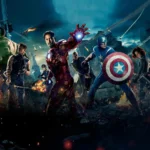
Avengers: Endgame (2019) is a somber, patient send-off that opens in grief, sharpens into a genuinely fun time-travel heist, and closes on a battle large enough to flatten everything around it. Its biggest strengths are its handling of loss, the character payoffs it delivers for Tony Stark and Steve Rogers in particular, and a final-hour spectacle that earns its crowd-pleasing moments through accumulated history rather than empty scale. Its biggest weaknesses are a predictability baked into every beat, the dramatic dead-end of Smart Hulk, and Captain Marvel’s near-total absence from the story’s emotional logic.
The first thing you notice is the silence. After the deafening chaos of Infinity War, this one opens on Clint Barton teaching his daughter to shoot a bow in a sun-warmed field and then on nothing. His family gone mid-sentence, half of everyone erased. No score to tell you how to feel. Just an arrow landing in an empty target.
I walked out of the theater not exhilarated but hollowed. That’s a strange thing to say about a superhero blockbuster, and I mean it as a compliment. The film kills Thanos in the first twenty minutes. Thor takes the head off, and it changes nothing, because the stones are already gone. Revenge, and it’s empty. Five years pass. The world keeps grieving.
Also Read: Avengers Infinity War Review
The Five-Year Time Jump: An Opening That Refuses to Rush
The Russo brothers make a deliberate choice early: they slow everything down. Long close-ups hold on faces well past the point of comfort, trusting the actors’ clenched jaw, a wet eye to carry what the script doesn’t say aloud. Alan Silvestri’s score arrives late and quietly, easing in beneath the scene rather than announcing itself. For a franchise that usually opens at full throttle, that restraint is a statement.
The five-year jump is the smartest structural decision in the whole film. Most franchises would reset the board and pretend the dusting never really stuck. This one lets it stick. Steve Rogers runs a support group for survivors. Tony Stark is out on a lake with Pepper and a young daughter, having chosen a life over the war. The grief arrives on schedule; every beat lands where you’d expect, but at least the film has the nerve to make you wait for the plot to show up.
MCU Cast Performances: The Actors Carrying the Emotional Load
Robert Downey Jr. looks gaunt here, physically diminished, and he plays it deliberately as a man running on fumes who knows it. When he finally cracks the time-travel math and stands in his kitchen whispering it to himself, terrified of what solving it means, it’s the most interior work he’s done in the role. Chris Evans carries the emotional weight of the ensemble with a plainspoken steadiness. He’s never been a flashy actor, but the film leans on that quality hard, and it holds all the way to the end.
Karen Gillan deserves more credit than she typically gets. The near-monotonic rasp and flat affect could easily read as one-note. Still, she’s doing careful, interior work conveying an internal struggle without much help from the dialogue. The film gives her its strangest structural idea: past Nebula and present Nebula, the same character split across her own timeline, until the present version shoots the version of herself she used to be. It’s the film’s most quietly disturbing moment, and Gillan makes both sides feel distinct and real.
Thor gets reduced to a paunchy, day-drinking wreck holed up in New Asgard. The film plays it for laughs, and the laughs mostly land, but there’s genuine sadness underneath the beer gut that the movie only half wants to acknowledge. His scene with his mother on Asgard, her telling him that he’s exactly the mess he’s supposed to be, is where it lets the joke breathe into something honest. Hemsworth commits fully. The film could have trusted that sadness more often instead of cutting back to the fat jokes.
Not everything works. Smart Hulk is the clearest problem. The idea is coherent on paper: Banner and the Hulk have reconciled, sharing one body, the internal war finally resolved. But that war was the character’s entire dramatic engine. The tension in every previous Banner scene came from the threat of losing control, the Hulk breaking through at the worst possible moment.
Remove that threat, and you have a large, agreeable scientist who signs autographs and orders lunch. That matters most in the finale: Banner is the one who puts on the gauntlet and snaps everyone back, a moment that should carry enormous risk. Instead, it reads as a logistical task, handled by a character who no longer has anything to lose.
Captain Marvel has the opposite problem: enormous implied power, almost no narrative function. She arrives, leaves, returns for the final battle, and the film never integrates her into the story’s emotional logic. She’s there to solve problems, not to be a character.
Also Read: Avengers: Doomsday D23 Trailer Breakdown
The Time Heist: Where the Middle Hour Finally Loosens Up
This is where the film remembers it can be fun. The time heist occupies the middle stretch as a genuine caper, splitting the team across earlier films to retrieve the Infinity Stones before Thanos did. The 2012 New York sequence is the showpiece: two versions of the Battle of New York colliding, Cap fighting his younger self and muttering
“that is America’s ass”
at his own backside. It’s fan service, but it’s fan service that actually earns its laughs by being structurally playful rather than just nostalgic.
The heist also carries the film’s cruelest turn. Clint and Natasha go to Vormir for the Soul Stone, and Vormir demands a soul. They fight over who gets to die, and Natasha wins by losing, throwing herself off the cliff so Clint doesn’t have to. No grand funeral. No resurrection when everyone else comes back, because the Soul Stone doesn’t give refunds. She doesn’t return, and the film mostly moves on. Whether that registers as a flaw or the point depends on how generous you’re feeling toward the story’s priorities.
One technical note worth flagging: the digital de-aging applied to Robert Redford as a younger Alexander Pierce during the 1970 Camp Lehigh sequence occasionally loses the illusion, particularly around the eyes and mouth. The skin looks smoothed and relit, but the underlying muscle movement doesn’t quite match what a real face does. The uncanny-valley effect is brief, but it broke the scene’s immersion at a moment when full engagement mattered.
The Final Battle Against Thanos: An Act Built to Break You
The last stretch is enormous: the Avengers compound leveled, the battle sprawling across a ruined landscape with every resource the franchise has accumulated thrown onto the screen at once. The Thanos who arrives here is not the one who won in Infinity War. That version had completed his mission, absorbed the consequences, and carried an exhausted conviction that made him genuinely unsettling. The past-Thanos pulled forward into the present is more aggressive, less philosophical, and dramatically simpler. The film trades a complex villain for an unstoppable one, a fair exchange for a finale that needs momentum more than nuance.
Then the portals open. Doctor Strange’s sparks flicker in the sky, and every dusted hero walks out of a glowing ring while Silvestri finally lets the full theme off the leash. My screening lost its mind. Then Cap catches Mjolnir he’s been worthy this whole time and never mentioned it and Thor’s giddy
“I knew it!”
produced the single biggest crowd reaction I’ve heard in a theater. It’s engineered to the millimeter. It also works completely.
The tension I can’t shake is that you can feel the engineering throughout. Tony’s death makes the point clearly. He takes the stones from Thanos’s gauntlet, fits them onto his own suit, says
“I am Iron Man,”
and snaps. The radiation kills him. What follows is a full funeral, a recorded goodbye, a wreath drifting on a lake.
That’s what happens. The more interesting question is why it still lands emotionally when it’s so thoroughly telegraphed. The honest answer is that it does, barely, but genuinely, because his arc across six appearances was always about a man who couldn’t stop protecting a world he was terrified to love. The death closes that loop exactly where the logic pointed. Downey’s performance in those final seconds does real work, pulling something raw out of a moment the script had already predetermined. But there’s a meaningful difference between a payoff that surprises you and one that arrives on schedule. This film does the latter, brilliantly. The craftsmanship is real. So is the constraint it imposes.
Closing the Infinity Saga: Why This Felt Different From Every Other MCU Film
Most MCU films carry a structural obligation to the next entry: a mid-credits tease, a new character seeded mid-story, a stone passed forward to set another table. This one doesn’t. Free to close a door rather than open one, the filmmakers consistently prioritize weight over momentum, and you can feel that choice throughout.
That’s why Steve’s ending works on a level the plot mechanics alone can’t account for. If you’ve watched Cap and Peggy lose their chance across multiple films the almost-dance in 1945, the frozen decades, every time he chose duty over what he actually wanted then watching him stay in the past and live that life carries genuine weight. The film doesn’t explain why it matters. It trusts that you already know. Come in cold and Steve sitting on a bench as an old man reads as a pleasant send-off. Come in with a decade of investment, and it hits like a gut-punch dressed as a happy ending.
Final Verdict: What Lingered on the Drive Home
I keep coming back to the quiet not the portals or the hammer or the moments built for applause, but the silence at the start and Tony’s recorded goodbye playing at his funeral over a wreath drifting on water. That’s where the film earns its credibility. Not through scale, though the scale is staggering, but because the machinery is pointed at something real: grief, loyalty, the cost of choices made across a decade. And when it trusts stillness, an old man on a bench, a helmet cracked in the dirt, something honest slips through. The payoff only lands because the loss did first. That’s what stayed with me walking out.
Genre: Action, Adventure, Sci-Fi
The Avengers: End Game Cast, Crew & Other Info
Avengers: Endgame FAQ: Ending and Spoilers Explained
Does Tony Stark die in Avengers: Endgame?
Yes. Tony Stark takes the Infinity Stones from Thanos during the final battle, fits them onto his own gauntlet, says “I am Iron Man,” and snaps Thanos and his army out of existence. The radiation kills him, and the film gives him a full funeral sequence. It’s the emotional centerpiece of the ending.
How does the time-travel heist actually work?
The surviving Avengers use Pym Particles to revisit moments from earlier MCU films and collect the six Infinity Stones before Thanos did, then bring them to the present to reverse the snap. Smart Hulk performs the second snap to restore everyone who was dusted five years earlier.
Do Black Widow and Vision come back at the end?
No. Natasha sacrifices herself on Vormir to secure the Soul Stone and does not return; that stone requires a permanent, irreversible loss. Vision, killed in Infinity War, also stays dead. The reversal only undoes the snap, not every death that preceded it.
What happens to Captain America at the end?
Steve Rogers volunteers to return the Infinity Stones to their original points in time, then chooses to stay in the past and live a full life with Peggy Carter. He reappears as an old man and passes the shield to Sam Wilson, closing out his arc. The ending matters because Steve’s entire story was built around a man who sacrificed his personal life for duty the dance with Peggy he never got, the decades he lost to ice, every moment he chose the mission over what he actually wanted. Staying in the past isn’t retreat; it’s the first time he allows himself to choose himself. That context is what turns a quiet scene on a bench into something genuinely affecting.
Do I need to have seen the earlier Marvel movies?
For the plot mechanics, not strictly, the spectacle is self-contained enough to follow. For the emotional payoffs, yes. Nearly every moment that lands hard depends on years of history with these characters. Come in cold and the emotional beats will feel like noise rather than resolution.

Shikhar Jauhari is an entrepreneur, journalist, and digital content strategist with expertise in SEO, WordPress, and online publishing. He is the founder and editor of WRI News, where he covers entertainment, finance, government schemes & lifestyle. With a strong focus on delivering accurate, engaging, and reader-first content, he combines editorial excellence with data-driven SEO strategies to create content.
Over the years, Shikhar has worked as a content writer, editor, website manager, SEO specialist, business analyst, and finance professional for media platforms, businesses, and digital agencies. His experience spans content management, business strategy, taxation, accounting, and digital marketing, enabling him to approach every project with both editorial insight and strategic thinking.