Account Based Marketing (ABM): We’ve all sent out generic emails to many people in marketing. Personalizing efforts for each individual can boost confidence in your approach, making your audience feel more assured about ABM’s effectiveness.
Your business may use account-based marketing (ABM) to consider its most valued customers as niche markets and uniquely communicate with them. If you do this, along with tailoring the buyer’s experience and developing account-specific messaging, content, and campaigns, your return on investment (ROI) and customer loyalty will rise.
Account Based Marketing (ABM): What Is It?
Account-based marketing (ABM) business-to-business (B2B) methods target specific accounts rather than the entire market, allowing marketing to concentrate resources on high-value clients and improve campaign effectiveness. This focused approach ensures that efforts are directed toward the most promising prospects, making marketing more efficient and aligned with sales goals.
ABM employs various ‘outbound’ tactics, such as social selling, video prospecting, customized advertising, and direct mail, to attract the ICP’s attention. This targeted approach emphasizes coordination between marketing and sales to deliver tailored messages to key decision-makers, highlighting its strategic value.
Account-based marketing strategies
Many professionals in the field believe that ITSMA pioneered the ABM movement in the 2000s. It has come to identify the strategic, light, and programmatic ABM approaches that various firms use.
Effective ABM
Individual implementation of this technique often involves the most significant strategic accounts. Developing relationships between companies and their target audiences is highly valued in strategic ABM. As a result, this approach gives particular weight to marketing campaigns customized explicitly to the desired client.
ABM Light
ABM may now be undertaken on a much bigger scale thanks to the ABM Lite methodology. For example, accounts of similar size facing the same challenges and working on comparable projects can receive the same targeted message and creative content, enabling scalable yet relevant outreach without extensive customization.
Automated ABM
Programmatic ABM combines strategic and light ABM to offer highly targeted marketing to large accounts using cutting-edge technologies. This technique is frequently used in conjunction with focusing on a particular region along the horizontal or vertical axes.
You can decide that utilizing various strategies is the best course of action, depending on your industry and the scope of your ABM campaign, encouraging confidence and a sense of control in your planning process.
Account-Based Marketing Advantages
Account-based marketing is becoming increasingly popular among companies serving large client bases in the business-to-business sector. Account-based marketing has several benefits over other marketing techniques for companies looking to sell to big clients with drawn-out sales cycles and high transaction values.
Utilizing a customized advertising strategy
Modern marketers create communications tailored to their target accounts’ needs and interests rather than employing a cookie-cutter strategy, leveraging the data they have about those accounts.
Marketing and sales departments working in Unison
Collaboration between marketing and sales departments is encouraged through account-based marketing, fostering a sense of partnership and shared purpose in targeting, campaign development, and account advancement throughout the sales funnel.
reduction in the sales cycle’s duration
Before engaging in a significant transaction, all parties involved should consider their interests. The sales cycle often lengthens as the process moves slowly from lower-level contacts to top decision-makers. Account-based marketing shortens this process by engaging multiple leads simultaneously and building relationships early, resulting in faster conversions.
greater return on investment
Account-based marketing has the highest return on investment (ROI) of any B2B marketing technique. Account-based marketing is, according to 85% of business owners who measure returns on investment, their most successful tactic.
Fewer resources are squandered
To avoid wasting already allocated dollars, spending is focused on the top few accounts with the highest likelihood of generating a sale.
ABM also gives the sales department more influence over the marketing plan
A company begins developing a list of priority customers whose requirements will always be met. This might result in the sales team paying attention to lower-tier clients, who can be essential to the business’s long-term survival.
Account-Based Marketing Drawbacks
Though ABM is quite useful for managing a large client base, it also has drawbacks.
Adding new clients requires more work.
The extent to which you tailor it to each brand will depend on how many accounts you’ll need to utilize the duplicate content for. It takes time and effort to create an effective automation tool. Using Engage for all your marketing needs, including ABM, might ease many concerns.
Another essential cost of ABM is labor
Account-specific messages, cadence, and content development are required for this strategy to be effective. It is possible if you have a capable content team with enough time, money, and skill.
limitations imposed by the technology at hand
Setting up a fully operational, automated ABM system might take a lot of time because account-based marketing is still relatively new in the marketing industry. Businesses should put convenience before urgency when using an ABM system.
What do tools for account-based marketing do
ABM techniques may be automated using various technologies. Tools that support ABM infrastructure and orchestration, B2B data enrichment, predictive analytics and artificial intelligence-based recommendations, and interaction management (including digital advertising, direct mail, websites, events, and sales outreach) are a few examples.
Understanding the many data formats these systems support is essential, as data enrichment is a primary purpose of ABM tools.
Technographic data
investigates the software and hardware used by accountants to run their businesses. Technographic data is essential for IT businesses since it enables identifying potential clients with compatible systems and excluding others. Data may be gathered from various online sources, such as job and discussion forums, as well as through site scraping and competitive intelligence firms.
Firmographic data
includes information on the sector, company size, number of locations, employees, annual revenue, and growth. Annual reports, LinkedIn, and outside vendors are the best sources for firmographic data.
Intent data
Based on the behaviors and signals it displays, determines if a particular account is “in-market” for a solution. Intent data may come from third-party providers, first-party content downloads or ad clicks, business-to-business (B2B) forums, and job boards.
ABM Strategy: Success in Six Easy Steps
Here are six short steps to create & implement an ABM strategy.
Make a list of potential customers who suit your specialization
Account-based identification technology employs a variety of indicators to pinpoint the high-value accounts most likely to make purchases, including product consumption, business fit, culture, budget, hobbies, investments, and business connections.
Get the audience you want to visit your website
Connect with your ideal customers and decision-makers online, wherever they may be. Get people’s attention by marketing to their particular challenges and providing solutions to those problems.
Create unique, interesting interactions by adjusting the material for each user
Increase engagement by using specific language and imagery to personalize content and CTAs for each audience.
Concentrate on particular accounts to generate new business opportunities.
Use an ABM strategy in your marketing automation software to produce higher-quality leads with fewer fields.
Help your fellow sales associates complete transactions
To adapt your outreach and have more effective encounters, find the finest contacts at your target company and learn more about them.
Impact assessment for the entire sales funnel
Use a combination of leading and lagging metrics to evaluate the performance of your campaigns and ABM strategies, such as downloads, MQAs, win/loss rates, funnel velocity, and annual contract value.
Cross-channel ABM extension
ABM may help all of your marketing initiatives. The outcome? Improved and more potent transmission routes.
Advertising
Because its main objectives are to increase click-through rates and brand awareness, display advertising is frequently seen as a top-of-the-funnel strategy. Using an ABM framework, more strategic campaigns can be created that cover the whole sales cycle and are customized for each customer, maximizing efficiency and lowering costs.
Using account-based marketing strategies, you may purchase ads and send targeted emails to specific client groups to promote to them. You can assess the campaign’s effectiveness by monitoring increases in website traffic and engagement from those crucial accounts. You may use the “cost per engaged account” statistic to assess the return on investment of your ABM advertising expenditures.
Internet Marketing
Your website deserves more attention than the other options you have available. You can miss out on some of your most fruitful sales chances if you provide your consumers with a cookie-cutter experience. Through ABM, you can track which accounts are visiting your website and better service them. You may modify almost every phrase to suit your tastes.
By catering to specific user subgroups in terms of metrics and overall user experience, you can utilize ABM to enhance the usability and performance of your website. Please include them in your statistics to identify your most valued visitors and gain additional insights into their engagement, activity, and conversion rates. Send them straight to the content that matters to them using segment-based personalization. You may add more bespoke products to your collection after minor changes to existing content and message.
Webinars and other events
These techniques work well for putting many leads into your sales funnel, but an account-based strategy will hasten the flow of qualified customers to your sales team. The result is more worthwhile events with more value.
You may use account-based marketing strategies in your event marketing plan by examining potential webinars and event attendance based on the degree of overlap between your target account lists and those you’re considering. It’s a good idea to check if you can get your hands on a list of people who have previously attended an event of this nature while evaluating anything new. As soon as you receive event leads, ensure the sales staff can access them. You should also provide them with CRM data showing how your ideal customers have signed up. Up to 30% of webinar registrations may arrive early.
Industry Commercialization
Although the field marketing and sales teams share a common objective, this does not always make the organization account-centric. Plans are often created based on sales or regional needs rather than focusing on your whole ABM approach.
Create a map of your target accounts’ physical locations as the first step in implementing account-based marketing in your industry. Create a prioritized list of the cities you can reach with your financial and human resources. Then, split the list into levels based on the density of your accounts. Programs should be created in conjunction with sales to establish a consistent presence in target areas. Start projects that build pipelines and fill them.
The Top 5 ABM Programs
To automate your ABM process, you can consider these programs.
HubSpot ABM Software
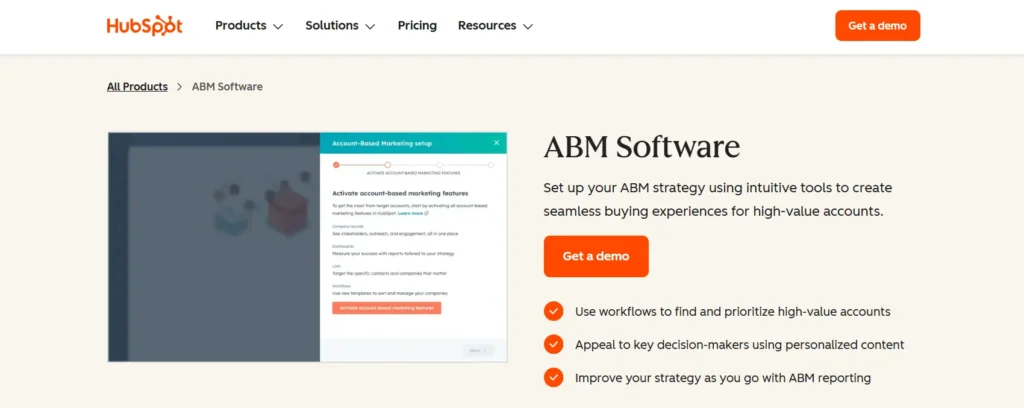
Without leaving your customer relationship management platform, you can execute a full-fledged campaign using HubSpot’s ABM tools. Create an ICP, or “ideal client profile,” with its assistance.
AdRoll
With AdRoll, you can automate sales processes, including client outreach and online marketing campaigns.
DemandScience
End-to-end ABM services are provided through the DemandScience platform. You may utilize its details to customize your strategy for every client.
6Sense
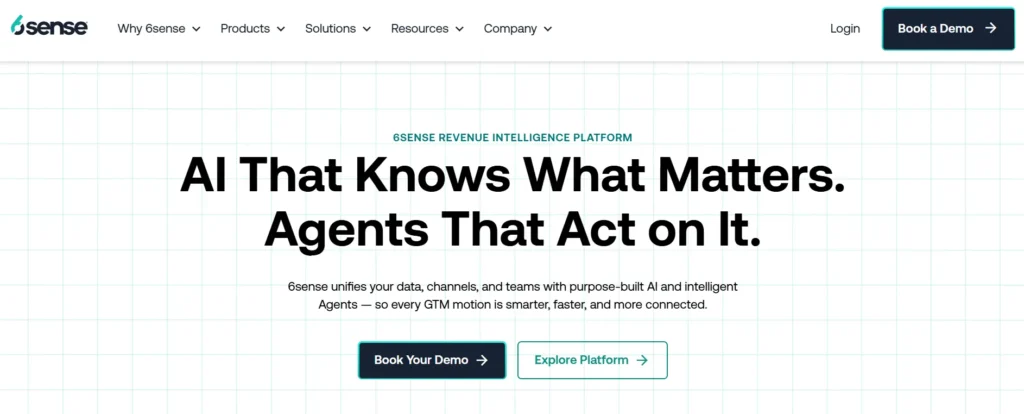
This platform places great emphasis on account functionality. Users have access to the resources needed to communicate with customers.
MadisonLogic
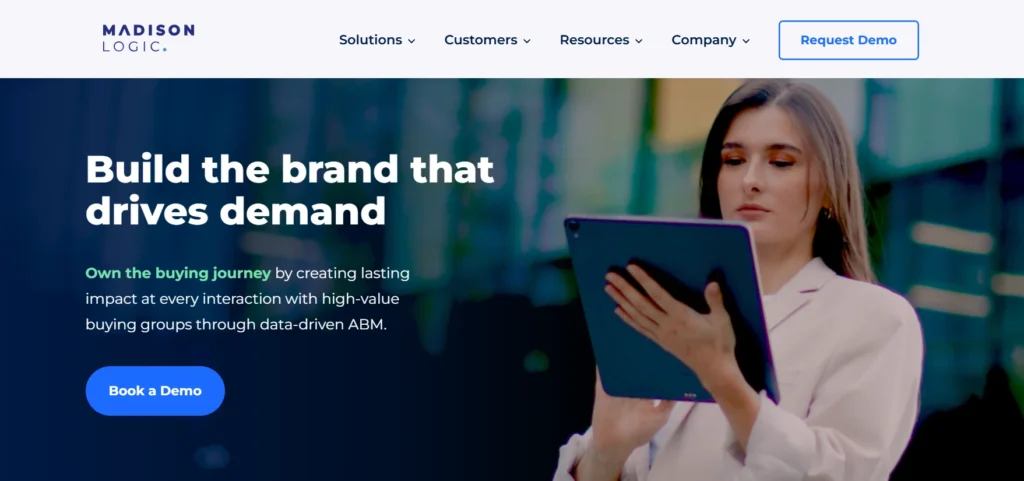
MadisonLogic offers ABM solutions for online advertising and content delivery.
Conclusion
Account-based marketing should concentrate on the fundamentals to prevent feeling overburdened. Marketing professionals no longer track impressions, clicks, and leads. Instead, you’ll be watching the activities and communications of a select few accounts. You can more effectively identify key clients, reduce friction that slows your development, and expand your organization using solutions that your marketing and sales teams can utilize concurrently.