Doctor Doom—Victor Von Doom, is Marvel’s most psychologically complex villain: a genius sorcerer-king driven by childhood loss, wounded pride, and the genuine belief that only he can save the world. His story is less a tale of evil than of brilliance shaped by grief, making him one of the most compelling and contradictory figures in comics history.
By the time Victor Von Doom enters any room, any comic panel, any crisis threatening the fabric of reality, he’s already three moves ahead, already certain he’s right, already carrying the weight of two dead parents and a scarred face he refuses to let the world see. With Avengers: Doomsday bringing him to the center of the MCU, that portrait is reaching the widest audience it’s ever had. The defining condition of Doctor Doom is that he is perpetually arriving in the middle of something, never at peace, never finished, and understanding why requires taking all of those threads seriously.
To call him Marvel’s greatest villain is both accurate and insufficient. The label flattens something genuinely strange and compelling. Doctor Doom is a dictator who freed his people. A man of science who mastered sorcery. A figure of towering arrogance who, when offered godhood, still couldn’t outrun his own insecurities. His complexity isn’t incidental to the character; it is the character.
Understanding why requires going back to Latveria. Not the Latveria Doom rules with an iron fist from behind a metal mask, but the Latveria of his childhood: poor, oppressed, filled with people who suffered under the whims of Baron Vladimir. This is where Victor Von Doom was formed, in a country where powerlessness wasn’t a philosophy but a daily reality. It left marks that no armor has fully covered.
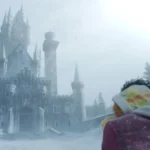
His father, Werner, was a healer. His mother, Cynthia, was something more dangerous: a woman who turned to dark magic to protect the people she loved, struck a deal with the demon Mephisto, and paid for it with her soul. Victor was young when she died. Young enough that his memories of her were more impression than image: a face, a warmth that the cold could never replicate. When Werner later died in a snowstorm, sacrificing his own warmth to keep his son alive, Victor was left with his mother’s magical texts, his father’s medical knowledge, and a grief that had nowhere reasonable to go.
That grief shapes everything that follows.
Doctor Doom’s Origins and Motivations
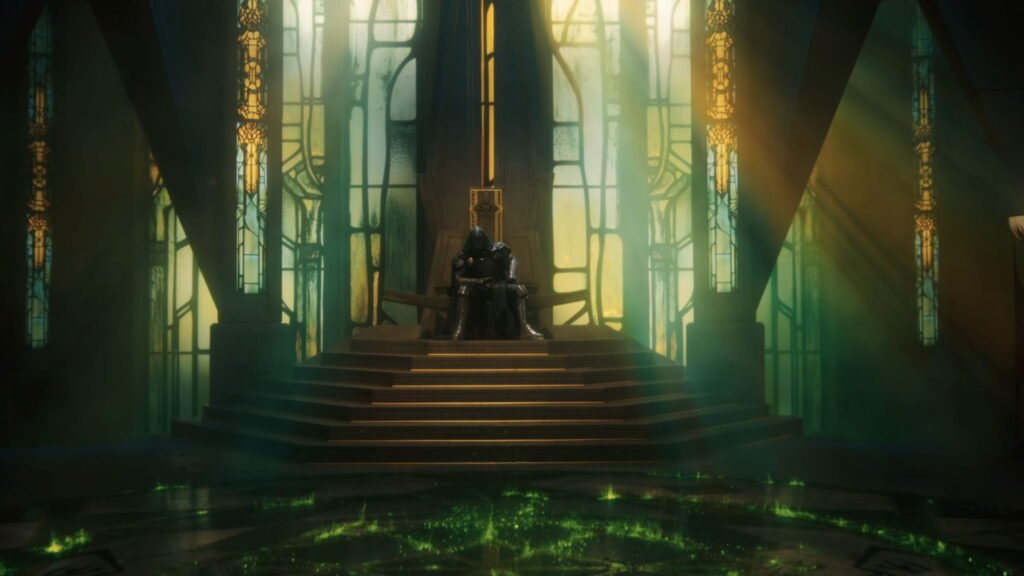
The simplest reading of Doctor Doom is a man who wants power. It’s not wrong. But it mistakes the symptom for the disease. What Doom actually wants is control over loss, which is to say, control over everything, because loss has a way of arriving from every direction.
His obsession with rescuing Cynthia’s soul from Mephisto is the clearest illustration of this. For decades, through deal after deal and battle after battle, Doom returned to Mephisto’s realm. He could have let it go. He never did. In Doctor Strange and Doctor Doom: Triumph and Torment (Marvel, 1989, written by Roger Stern with art by Mike Mignola), when he finally succeeds in freeing Cynthia, the victory is immediately complicated by her reaction. She sees what her son has become. Horror crosses her face. Doom wins the objective and loses the thing the objective was for.
That scene captures something essential about how the comics portray him: his intelligence solves the problem; his character creates a new one.
The rivalry with Reed Richards operates on similar terms. On the surface, it reads as academic jealousy: two brilliant men, one of whom cannot accept that the other might be marginally smarter. But what Victor actually cannot accept is the existence of a peer.
His entire psychological architecture was built on the premise that he was singular, destined for something greater than everyone around him. Reed Richards doesn’t just challenge Doom’s intellect; he challenges Doom’s identity. When Reed noticed the flaw in Victor’s dimensional experiment and warned him, Victor ignored it. Not out of stupidity. Out of a conviction that being wrong was existentially intolerable.
The explosion that followed, the scar on his face, the mask placed too soon against his skin these are not accidents so much as the physical expression of what pride costs. Doom wears the consequences of his arrogance literally, in iron, for the rest of his life. And he insists on reframing it: not as damage, but as armor, not as failure, but as transformation.
Most people, confronted with proof of their own fallibility, adjust. Victor Von Doom constructed a rationale around his.
Also Read: What to Watch Before Avengers
Doctor Doom and Valeria Richards: The Humanity Behind the Armor
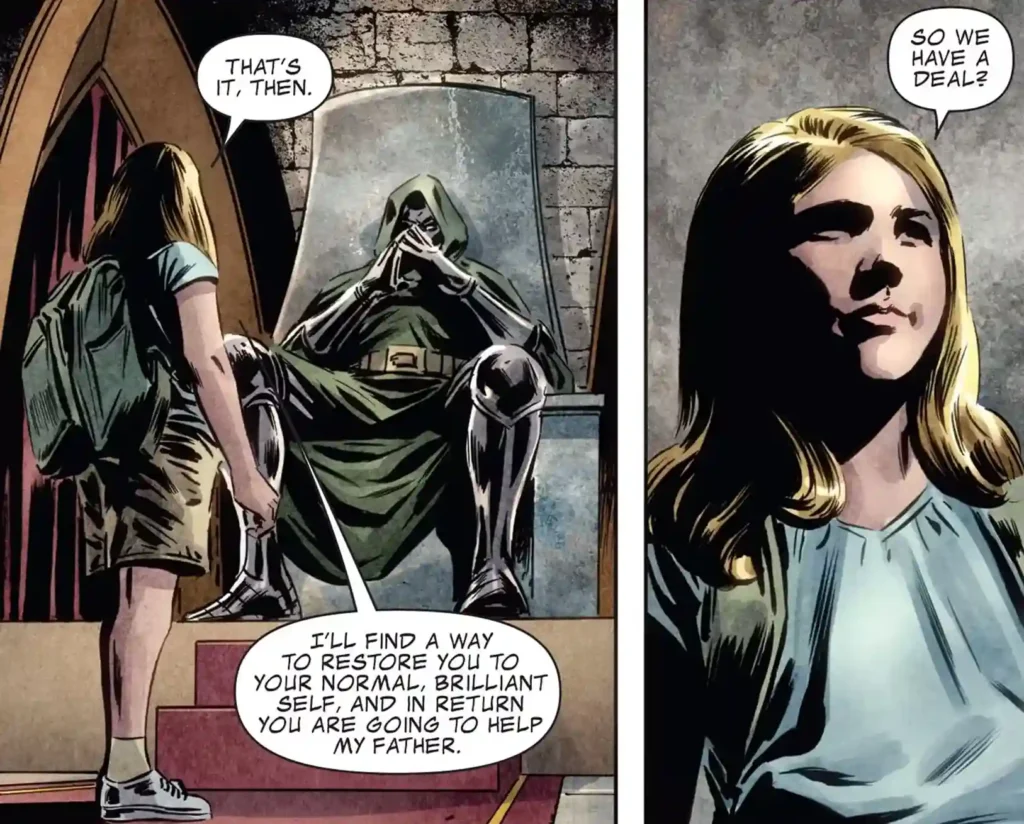
His relationship with Valeria Richards is one of the most revealing threads in the entire Doom mythology. When Sue Storm’s unborn child threatened both their lives, Doom delivered the baby successfully, carefully, and named her after his childhood love. The price he asked was unusual for a supposed megalomaniac. He didn’t demand territory or concessions or power.
He asked for the right to name a child, and then promised to protect her. The fact that he’d attacked the Fantastic Four months earlier, and would again, isn’t hypocrisy so much as Doom’s particular compartmentalization at work. He can wage war on Reed Richards and genuinely care for Reed’s daughter simultaneously. Both things are true. He doesn’t experience any contradiction.
When Valeria grew into a young intellect capable of matching Doom’s own, their bond deepened. She called him “Uncle Doom.” He let her. When the Intelligencia damaged his mind and she offered to restore it, the exchange carried the texture of real affection, something that existed outside strategy or advantage. Before what appeared to be his final sacrifice against the Celestials, depicted in Jonathan Hickman’s FF and Fantastic Four run, he comforted her. A man facing what seemed like his last moments before cosmic destruction, focused on a child’s guilt.
Every time his human side surfaces, it unsettles him, and he buries it back beneath certainty and control. When he finally approached Doctor Strange for assistance entering Mephisto’s realm, he framed it as Strange repaying a debt. Doctor Doom rarely asks for help without reframing it as a transaction.
Doctor Doom’s Powers and Intelligence: Science, Sorcery and Strategy
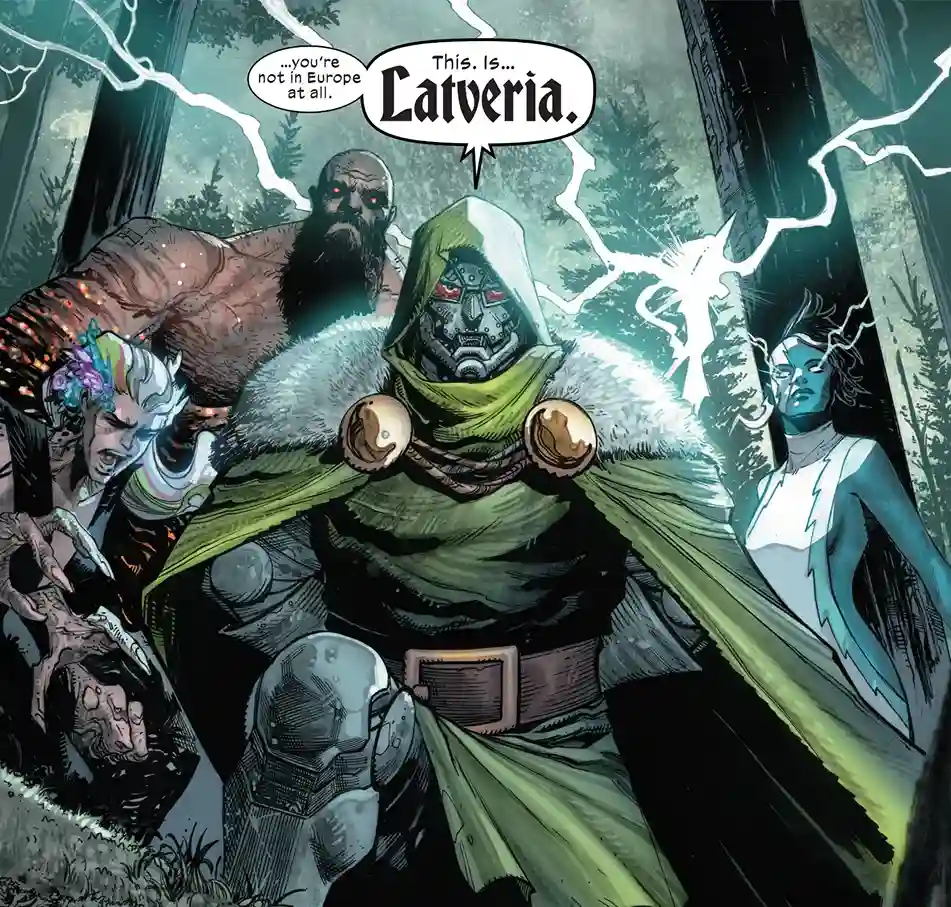
To understand why Doom is genuinely threatening, not just dramatically compelling, you have to take stock of what he is.
Doom possesses one of the most capable human intellects in the Marvel Universe. He built a time machine. He developed dimensional travel technology. He created Doombots sophisticated enough that heroes have defeated them and walked away believing they’d defeated Doom himself. His strategic thinking operates on long timeframes; he plans years, identifies weaknesses methodically, and constructs solutions before the problem has fully materialized. One illustration is his preparation before entering Mephisto’s realm in Triumph and Torment: he secured Strange’s assistance not by asking, but by winning a sorcerers’ competition that established a prior debt.
Then there is the sorcery. Unlike most comparable characters, Doom refused to choose between science and magic. Characters like Reed Richards and Tony Stark work primarily within empirical science; Doctor Strange operates almost exclusively within mystical frameworks. Doom pursued mastery of both and treated each as a tool rather than a discipline. That dual expertise brought him into direct competition with Doctor Strange, a contest Marvel depicts Doom winning, setting up his rise to Sorcerer Supreme, a title the One World Under Doom storyline later shows him holding.
His political intelligence rounds out the picture. As ruler of Latveria, Doom implemented advanced technology, economic stability, and genuine protection for his people. From Stan Lee and Jack Kirby’s original Fantastic Four run, where Latveria first appeared as a stable, modernized nation, to Ed Brubaker’s later work, which revisited Doom’s rule in the context of international politics, the comics consistently depict Latveria as materially functional under his leadership: citizens receiving healthcare, infrastructure, and security they hadn’t had under Baron Vladimir’s regime.
He is authoritarian, absolutely. Dissent is not tolerated. But the version of Doom-governed Latveria that appears across these eras is not a hellscape. That distinction matters for understanding his ideology. He delivers results, which gives his worldview a difficult-to-dismiss credibility.
Also Read: VisionQuest Trailer Explained
Doctor Doom’s Greatest Weakness: Hubris, Ego and the Blindspots He Cannot See
Hubris is the obvious answer, and it’s correct, but it’s worth being precise about what kind.
Doom doesn’t simply overestimate his abilities; his abilities are genuinely extraordinary. The problem, as the comics repeatedly dramatize, is that he cannot update his self-image in response to failure. When the dimensional experiment exploded, he blamed Reed rather than his own error. When his Doomworld creation eventually turned on him, he couldn’t process that his own intelligence had produced something that rejected him. When he became God Emperor Doom and held all of reality in his hands, Reed Richards still occupied the center of his thoughts.
In the final confrontation of Jonathan Hickman’s Secret Wars (2015), Reed asked Doom what he would have done with infinite power. Doom said he would have kept the world safe and under control. Reed said he would have made something better. And Doom believed him.
That exchange cost Doom everything, not because Reed took his power, but because Doom gave it up. His own honesty stripped him of the thing he’d fought his entire life to obtain. The moments his ego fails him are also the moments he is most exposed.
His rivalry with Reed Richards functions as a trap with no exit. Doom has beaten the Fantastic Four countless times. He has surpassed Reed in magical knowledge, in political achievement, and arguably in sheer breadth of power. None of it resolves the comparison. He is permanently measuring himself against a man who largely stopped competing long ago.
Is Doctor Doom a Villain or Antihero? His “Stolen Lives” Philosophy Explained
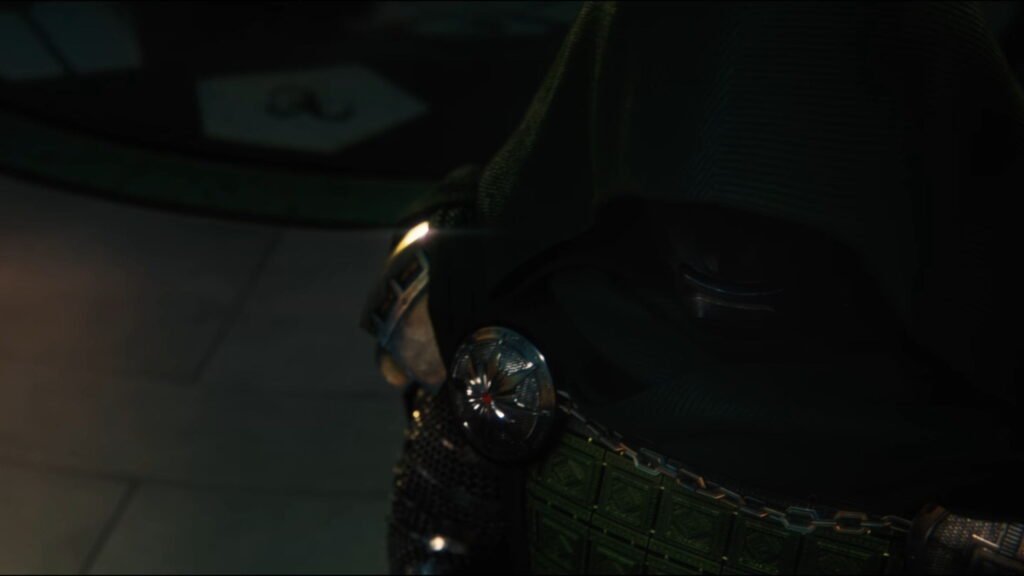
In the Avengers: Doomsday marketing material, Doom delivers a line consistent with decades of comics characterization: “All of you have been living stolen lives.” Whether or not the film explores the full depth of that philosophy, the idea maps directly onto how the comics have long portrayed his worldview. It’s one of the clearest windows into why Doom resists the label of a simple villain.
Doom genuinely believes that heroic intervention has corrupted the natural order. History-altering acts, reversals of death, and the repeated handling of cosmic power by figures Doom considers unqualified have stacked compromise upon compromise. Each intervention, in his reading, adds to an accumulated weight that someone, specifically him, must eventually correct. The One World Under Doom arc makes this explicit: Doom doesn’t seize global power because he wants to dominate. He seizes it because he has concluded, with complete sincerity, that he is the only one capable of administering it responsibly.
That self-appointed role is the core of his worldview and the source of most of his contradictions.
The problem is that his version of stewardship carries the same flaw he criticizes in others. Battleworld, the reality he constructed and ruled as God Emperor in Secret Wars, eventually turned against him. The One World Under Doom arc depicts his “perfect world” as one quietly powered by citizens converted into magical fuel without their knowledge. The good outcomes he produces are real. So are the methods beneath them.
The “heroic villain” label fits Doom better than most, but it still simplifies the picture. He has saved reality, fought Mephisto to free his mother’s soul in Triumph and Torment, and protected his people from genuine threats acts that read as heroic by any reasonable standard.
But in most of those stories, his heroism serves a larger vision in which Doom is history’s necessary protagonist and everyone else is incidental. When that vision collides with what people actually want, he doesn’t adjust. He insists. Whether that makes him a villain who occasionally does good, or a would-be savior whose methods are indefensible, depends largely on which arc you’re reading. Marvel has never resolved the question cleanly, which is part of what keeps the character interesting.
The circumstances around Valeria Richards’ death and Doom’s subsequent sacrifice to restore her, however, the specific continuity is parsed, point to something that sits outside his usual framework. What the Living Tribunal recognized in that moment was not strategy or ambition but genuine attachment: a willingness to give up power, title, and survival for a child who owed him nothing.
Doctor Doom: Frequently Asked Questions
Why does Doctor Doom hate Reed Richards?
Doom’s rivalry with Reed runs deeper than academic jealousy. When Reed identified a flaw in Victor’s dimensional experiment and warned him, pride refused to let him listen; the explosion scarred his face and fixed the rivalry in place. The deeper issue is that Reed’s existence challenges Doom’s core belief that he is singular and superior. He has surpassed Reed in sorcery and political power, yet none of it resolves the comparison. Even as God Emperor Doom in Secret Wars (2015), ruler of a reconstructed reality, he couldn’t stop measuring himself against a man who had largely stopped competing. The rivalry lives entirely inside Doom, which is why it can never be won.
Is Doctor Doom a hero or a villain?
Neither label fits cleanly. Marvel has placed him on both sides: he saved reality in Secret Wars, fought Mephisto to free his mother’s soul in Triumph and Torment, and briefly took on the Iron Man mantle to protect Earth, yet he also ruled Latveria as an authoritarian and, in One World Under Doom, powered his “perfect world” by converting citizens into magical fuel without their knowledge. The most accurate framing is that Doom pursues genuinely protective goals through methods most people would call indefensible, and he rarely doubts that the ends justify the means.
Why does Doctor Doom wear a mask?
After his dimensional experiment exploded, Doom demanded his iron mask be fitted immediately, pressing hot metal against his still-healing face and worsening the damage. The surface reason is vanity; he couldn’t accept an imperfect face. But the mask does more than hide a scar. It replaces Victor Von Doom with an identity constructed around strength and certainty, with no visible room for the grief that preceded it. The armor isn’t a disguise. It’s a transformation he chose to make permanent.
What is Doctor Doom’s relationship with Valeria Richards?
Doom delivered Valeria at birth when Sue Storm’s pregnancy became life-threatening, named her after his childhood love, and asked for nothing in return. As she grew into a formidable intellect, she called him “Uncle Doom.” Their bond ultimately cost him everything: after accidentally causing her death, he sacrificed his power, his title, and his life to restore hers. The Living Tribunal recognized the act not as ambition but as love, one of the few moments in Doom’s story that his usual calculations don’t fully explain.
What happened to Doctor Doom in Secret Wars?
In Jonathan Hickman’s Secret Wars (2015), Doom absorbed the power of the Beyonders at the moment of the multiverse’s collapse and used it to reconstruct existence as Battleworld, a patchwork reality he ruled as God Emperor. When the final confrontation came, Reed asked what Doom would have done with infinite power. Doom said he would have kept the world safe and under control. Reed said he would have made something better. Doom believed him and gave up the power willingly. Reed restored the multiverse; Doom was left an ordinary man, not defeated by a stronger opponent, but undone by a moment of honesty about his own limits.
How did Doctor Doom become Sorcerer Supreme?
Doom’s path to Sorcerer Supreme reflects his refusal to accept the boundaries most Marvel characters take for granted. Where figures like Reed Richards work within science and Strange within sorcery, Doom pursued mastery of both. That dual expertise brought him into direct competition with Doctor Strange, a contest Marvel depicts Doom winning. Whether that makes him the most qualified Sorcerer Supreme or simply the most determined one is a question the comics leave open. His holding of the title is most explicitly depicted in the One World Under Doom storyline.

Shikhar Jauhari is an entrepreneur, journalist, and digital content strategist with expertise in SEO, WordPress, and online publishing. He is the founder and editor of WRI News, where he covers entertainment, finance, government schemes & lifestyle. With a strong focus on delivering accurate, engaging, and reader-first content, he combines editorial excellence with data-driven SEO strategies to create content.
Over the years, Shikhar has worked as a content writer, editor, website manager, SEO specialist, business analyst, and finance professional for media platforms, businesses, and digital agencies. His experience spans content management, business strategy, taxation, accounting, and digital marketing, enabling him to approach every project with both editorial insight and strategic thinking.