Avengers: Infinity War Review: Why Thanos Still Works Years Later
Shikhar Jauhari
September 1, 2026
⚠️ Full spoilers throughout the Avengers: Infinity War Review. If you haven’t seen it, turn back.
A technically massive, emotionally uneven blockbuster that works best as a villain’s character study and stumbles under the weight of its own overcrowded ensemble. Thanos is the most fully realized figure on screen. A dozen heroes get squeezed to the margins. It’s structurally incomplete by design and still, against considerable odds, carries real emotional weight. This is a spoiler-heavy retrospective review based on a rewatch of the film.
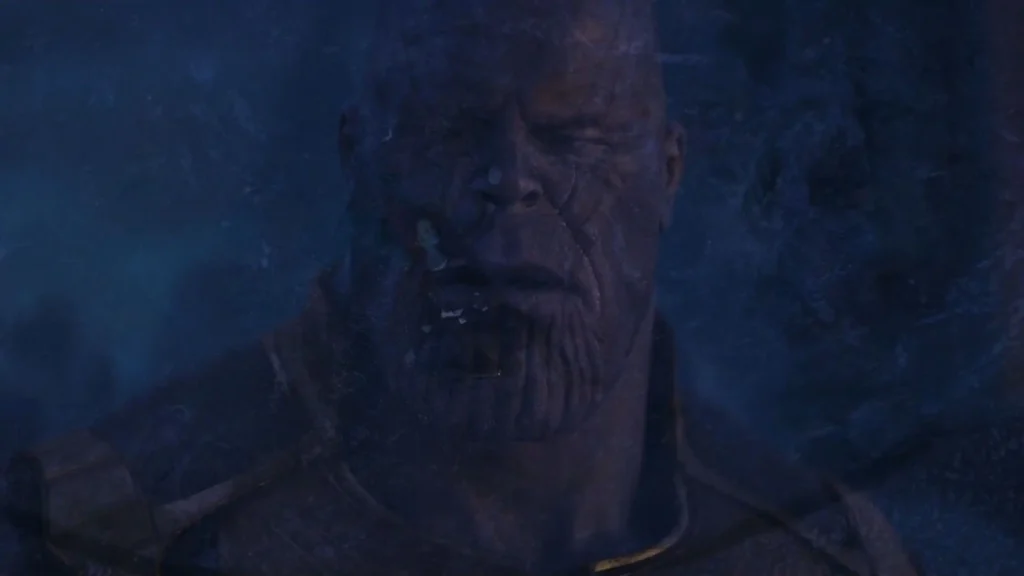
Here’s the image I keep coming back to. After Thanos snaps his fingers and half the universe turns to dust, the camera holds on his face not triumphant, not monstrous. Sad. The little orange soul-stone world shows him a child Gamora asking what it cost.
“Everything”
He says.
Brolin delivers that word like it’s the last thing he ever wanted to say, and it still lands. A motion-captured purple giant out-acted most of the humans in the film.
I’ve sat with this movie for several years now, and my feelings have gotten messier rather than cleaner. It’s a stranger, more melancholy piece of work than people gave it credit for at the time. It’s also a mess. Both things are very true.
This is a movie where the bad guy wins, and almost everybody dies. Loki gets killed in the first five minutes, actually killed, no tricks- Thanos’s hand around his throat, and the film is announcing something. This is different. Heimdall sends the Hulk away in a desperate act of sacrifice and is then stabbed for it. The movie doesn’t pause. No slow-motion close-ups, no swelling strings. It just moves. The opening massacre has the rhythm of a siege, and it’s brutal in a way Marvel films almost never are.
This came on the heels of Thor: Ragnarok and Black Panther, two films with actual directorial personalities—Taika Waititi’s neon absurdism, Ryan Coogler’s cultural intelligence, and staging precision. The Russos were handed a logistical nightmare instead of a canvas, and it shows. Infinity War looks competent. Rarely beautiful. Mostly gray-blue and busy. But the emotional architecture underneath it, borrowed from a decade of other people’s character work, is surprisingly sturdy.
Why the Vormir Scene is Infinity War’s Emotional Core
Everything involving Thanos and Gamora is where the movie lives or dies. And it’s where the film made its most controversial choice.
Gamora’s death on Vormir is the scene that separates Infinity War from every previous MCU film. Thanos has to sacrifice something he loves to claim the Soul Stone. He weeps. He throws her off a cliff. Saldaña makes you feel that relationship as real the fury, the history, the specific horror of being loved by someone who would still do this to you. The flashback to him choosing her as a child on her ruined planet is horrible and tender at the same time.
Brolin’s face in the aftermath, red-eyed, self-pitying grief, is exactly the right kind of unsettling. This is what a fanatic looks like: convinced of righteousness, grieving the cost, going through with it anyway. The film earns that particular emptiness.
Why Peter Quill Was Right (And Wrong) to Fight Thanos
The Titan sequence is the one that divides people. Thanos is subdued. Mantis is holding him under. They’re seconds from removing the gauntlet. And then Quill, having just learned that Thanos killed Gamora, loses it completely and blows the whole thing open.
The internet called him an idiot. I think that misreads the scene. Quill’s breakdown is the most human moment in a film full of people being strategically heroic. He loved Gamora. She’s dead. He could not stop himself. That’s not stupidity; it’s grief overrunning reason at the worst possible moment.
Strange’s parting act of surrendering the Time Stone and telling Tony
“We’re in the endgame now,”
suggests he saw something when he looked through 14 million possible futures. The film is smart enough not to explain it.
Wanda, Vision, and Thanos’s Cruelest Moment
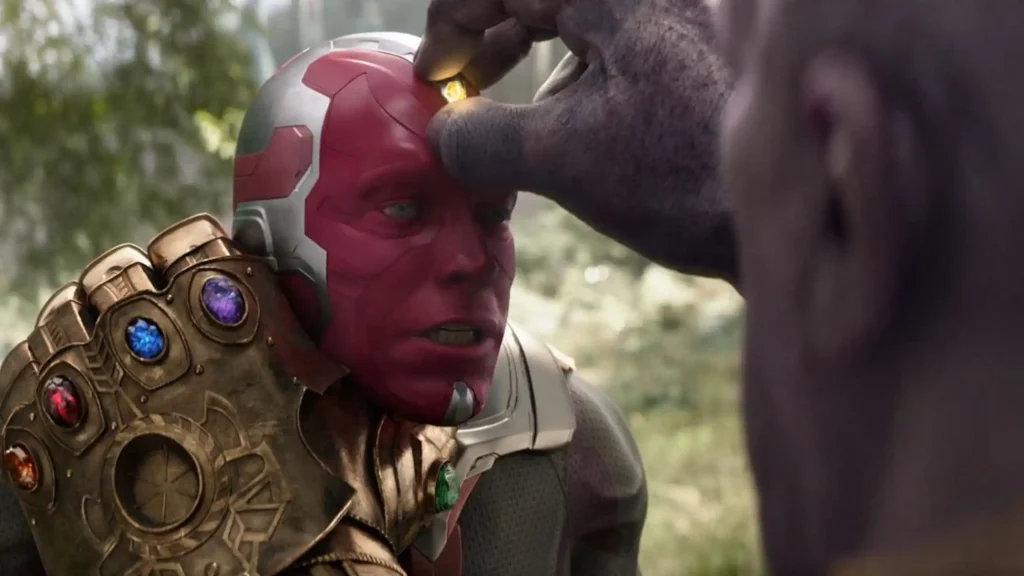
Bettany’s Vision goes through one of the film’s sadder arcs. Wanda has to destroy the Mind Stone and Vision with it to keep it from Thanos. Olsen’s face during that scene is remarkable: the absolute cost of it written across every muscle. Then Thanos reverses time, restores the Stone, and kills Vision again slowly, twisting his head until he goes grey and still.
That second death is intentionally ugly. There’s nothing heroic about it. It’s deliberate violence designed to underline that none of the sacrifice meant anything. Thanos got what he wanted anyway.
Why Hulk Refused to Fight in Infinity War
The film opens with Thanos beating the Hulk efficiently, almost contemptuously, and Banner spends the rest of the movie trying to Hulk out and being refused every time.
“He’s being a coward”
Banner says of his alter ego. It’s played for awkward laughs.
It’s an audacious choice. The Hulk has always been the franchise’s emergency button. Withholding him suggests something is being built. But the internal standoff is set up and never resolved within this film, and Banner gets an Iron Man suit instead. The whole thread hangs unfinished as the credits roll.
Balancing Thor and Spider-Man Against Cosmic Horror
Three of the MCU’s most insufferable personalities: Tony Stark, Peter Parker, and Peter Quill end up in the same place, and the film tries to build comedy out of their clashing egos. Some of it works. Holland’s Spider-Man is genuinely funny because he’s genuinely young and scared; his humor comes from anxiety rather than performance. The Aliens reference lands because it fits who Peter is.
But the Guardians material drags. Drax’s jokes feel obligatory. Rocket’s kvetching is on autopilot. Scenes that need you to feel the cosmic horror of Thanos’s mission are constantly undercut by someone cracking wise.
The exception: Hemsworth and Pratt’s posturing. Thor’s oblivious machismo bouncing off Quill’s wounded ego is genuinely funny because it’s true to both characters. Hemsworth has mastered playing a god who’s baffled that anyone else thinks they’re special.
The MCU Ensemble Cast: Infinity War’s Overcrowding Problem
There are too many people in this movie. Most of them know it.
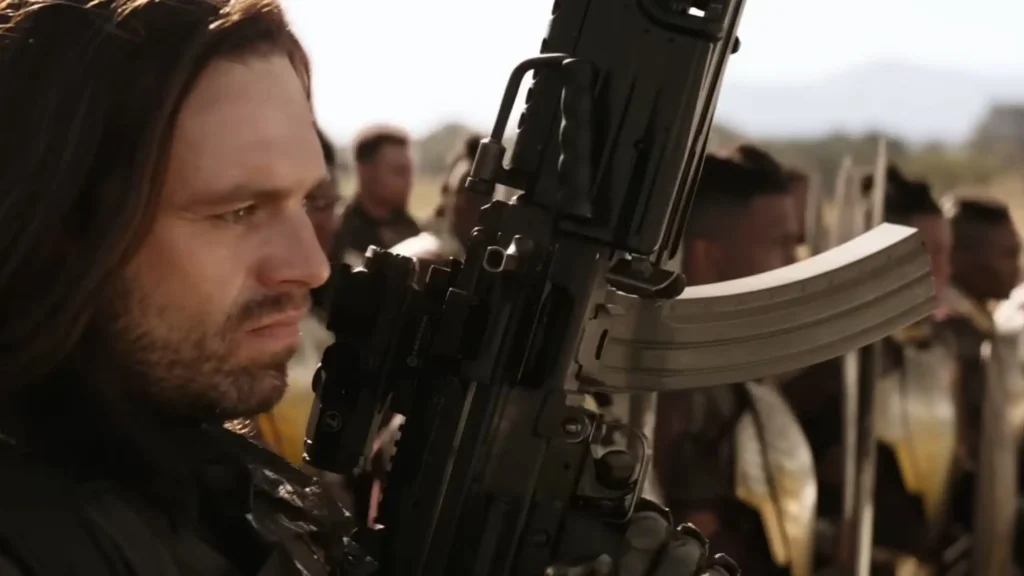
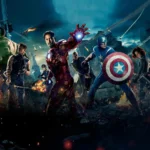
Black Panther, the lead of one of the MCU’s most culturally significant films, shows up to open the gates of Wakanda and fight in the grass. That’s it. Captain America arrives bearded and grim, gets a couple of good action beats, and barely registers. Black Widow is practically furniture. War Machine, Falcon, Bucky, Background Hero A, B, and C.
No actor can save an underwritten role, and this movie is full of them. The film knows this and does nothing about it, because there is nothing to be done. You cannot give every character in a 76-person ensemble meaningful screen time. Something breaks, and it’s always the people without their own franchise.
Peter Parker’s Death and the Ending of Infinity War
Then comes the last fifteen minutes.
Thanos gets all six Stones. The Avengers fail. He snaps his fingers. And people start dying not heroically, but quietly. Disbelievingly. Bucky reaches for Steve and crumbles. T’Challa falls. Groot goes to pieces.
Then Tom Holland, and this is the scene everyone remembers, clings to Tony Stark and says:
“I don’t want to go. I don’t want to go. I’m sorry.”
He drops.
Downey’s face in that moment the helplessness of it, the horror is possibly the best pure acting he’s done in the MCU. He’s holding a kid who trusted him, who followed him into space, and he can’t do anything. Holland plays the fear without vanity. The sequence is genuinely devastating in a way the genre almost never allows.
The film ends on Thanos alone on a farm, watching the sunrise. Satisfied. He got everything he wanted. He’s sitting in the silence he created.
Avengers: Infinity War Rewatch: What Holds Up Years Later
Aged well:
Thanos and Gamora’s arc is still the MCU’s most emotionally complex villain relationship
The Snap sequence, particularly Tony and Peter
Strange’s quiet calculation throughout
Thor’s grief underneath the comedy
The opening massacre as a statement of intent
Aged less well:
The Wakanda battle a hash of digital bodies and murky geography
The snap-zoom camerawork in fights, which sacrifices coherence for the illusion of dynamism
The Guardians’ humor, which now reads as obligatory
Hulk’s unresolved setup, which sits there
The cliffhanger structure, which asks a lot of patience on rewatch
Alan Silvestri’s score holds up throughout. It patches over visual choices that aren’t good enough for a film of this ambition, and it does that job better than it should have to.
Thanos Wins: Analyzing the Final Scene of Infinity War
That final image: Thanos, a small farm, sunrise, alone. He got everything he wanted, and there is no one to share it with. He looks like the loneliest figure in the universe, which, technically, he partially made that way.
Infinity War gives us the wound. It doesn’t offer a cure. And that’s still, years later, the most honest thing about it.
Avengers: Infinity War Frequently asked questions (FAQs)
Who dies in Infinity War?
Three characters die permanently before the Snap: Loki (strangled by Thanos in the opening), Heimdall (stabbed immediately after), and Gamora (thrown off a cliff on Vormir so Thanos can claim the Soul Stone). Vision dies twice: Wanda destroys him to prevent Thanos from getting the Mind Stone; Thanos reverses time and kills him again anyway.
The Snap then erases half of all life; among those who dissolve on screen: Bucky, T’Challa, Groot, Doctor Strange, Star-Lord, Drax, Mantis, and most memorably, Peter Parker, who dies in Tony’s arms.
Was Quill’s breakdown the reason they lost?
Partly, yes, but the article’s view is that calling it a simple mistake misreads the scene. Quill’s outburst on Titan, when he learns Thanos killed Gamora, breaks the plan at the worst possible moment. It’s grief overrunning reason, not stupidity. Strange’s deliberate surrender of the Time Stone, knowing one of 14 million futures leads somewhere useful, suggests the outcome wasn’t entirely undone by Quill. Still, his breakdown is the most viscerally human failure in the film.
Does Thanos actually win at the end of Infinity War?
Yes, completely. He assembles all six Infinity Stones, snaps his fingers, and erases half of all life in the universe. The heroes fail. The film ends with Thanos alone on a farm, having achieved his goal.
Why does Doctor Strange give Thanos the Time Stone?
Strange looks through 14 million possible futures before surrendering it. His final words to Tony, “We’re in the endgame now,” imply he saw a specific outcome he was working toward. The film deliberately doesn’t explain what. It’s one of Infinity War‘s most loaded silences.
Why doesn’t the Hulk appear after the opening fight?
After being beaten quickly and decisively by Thanos in the opening scene, the Hulk refuses to emerge for the rest of the film. The internal standoff between Bruce and his alter ego is set up but never resolved; it’s left as an unfinished thread.
Is Infinity War a complete story on its own?
No. It ends mid-conflict with no resolution, intentionally structured as the first half of a larger narrative. On its own terms, it’s a film that leaves you stranded by design.
Shikhar Jauhari is an entrepreneur, journalist, and digital content strategist with expertise in SEO, WordPress, and online publishing. He is the founder and editor of WRI News, where he covers entertainment, finance, government schemes & lifestyle. With a strong focus on delivering accurate, engaging, and reader-first content, he combines editorial excellence with data-driven SEO strategies to create content.
Over the years, Shikhar has worked as a content writer, editor, website manager, SEO specialist, business analyst, and finance professional for media platforms, businesses, and digital agencies. His experience spans content management, business strategy, taxation, accounting, and digital marketing, enabling him to approach every project with both editorial insight and strategic thinking.