The Avengers (2012), directed by Joss Whedon, is a superhero ensemble film that brought together Iron Man, Captain America, Thor, the Hulk, Black Widow, and Hawkeye for the first time on screen. It is still worth watching. At its best, it’s a sharp, funny character piece about mismatched personalities learning to cooperate under pressure, anchored by strong ensemble chemistry, Whedon’s punchy dialogue, and a genuinely thrilling Battle of New York finale.
Its main weaknesses are a thinly motivated Loki, a faceless alien army, and a middle act that occasionally stalls. More than fourteen years on, it remains one of the most fluid and character-driven films Marvel has produced, and the one that demonstrated at blockbuster scale how commercially powerful a shared superhero universe could be.
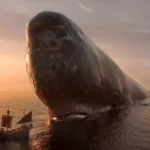
The moment that stuck with me wasn’t the big one. Not the swooping New York City shot where the camera pinballs between all six heroes mid-fight. However, that’s the one everyone remembers. It was earlier, quieter: Bruce Banner rubbing his thumb over the back of his hand, half a smile on his face, telling everyone his secret. “That’s my secret, Cap. I’m always angry.” Mark Ruffalo plays it so gently, almost apologetically, that you forget for a second what’s coming. Then he turns into a wall of green muscle and punches a space-whale in the face.
That’s the whole movie right there. A group of people who mostly don’t want to be in the same room learning, reluctantly, to be useful to each other. I came back to The Avengers recently expecting to feel a little cynical about it; we’ve had over a decade of diminishing returns from this machine since, and instead I found myself grinning through most of it. It’s lighter on its feet than almost anything Marvel has made since. What surprised me most was how rarely it felt like a franchise obligation. The character work drives the engine here, and that’s precisely what the MCU’s later ensemble films struggled to replicate.
How Whedon’s Ensemble Approach Makes The Avengers Work
You can feel Joss Whedon in every scene, for better and worse. This is a writer-director who came up making television about groups of prickly people trapped together, and The Avengers is essentially a bottle episode with a $220 million budget. The best stretch of the film isn’t a fight at all; it’s the long middle section on the S.H.I.E.L.D. helicarrier where nothing much happens except everyone getting on each other’s nerves. Tony Stark needling Steve Rogers. Bruce Banner circling the lab like a man trying not to touch a hot stove. The whole cast bristling in close quarters.
Whedon’s smartest structural decision is making the team’s inability to cooperate the plot itself, rather than a prologue to it. The movie earns its climax by making you wait for these people actually to work together, and that patience, extended across two hours, is what separates The Avengers from a more routine superhero pile-up. That may sound like a modest achievement, but in the context of a six-lead ensemble carrying this much franchise baggage, it isn’t. The personalities are the point, and the film never loses sight of that.
Robert Downey Jr. does the heavy lifting on charisma, obviously. Still, the performance that surprised me on rewatch was Chris Evans. In 2012, people underestimated him, the earnest square in a room full of quippers. Watch his shoulders, though. There’s a stiffness to how Evans carries Steve Rogers, a man literally out of time, that reads as loneliness rather than blandness. When he barks orders during the final battle, the relief on his face is the relief of a soldier who finally, finally has a job to do again. It’s small, physical acting, and it grounds all the CGI noise around it.
Also Read: Captain America: The First Avenger Review
Where the Avengers Phase One Finale Falls Short
Here’s where I’m going to lose the pure nostalgia crowd. Loki is more effective as a personal antagonist, a wounded, petulant foil for Thor and a provocation for the team than he is as a strategically compelling invasion mastermind. That distinction matters more on rewatch than it did in 2012.
Tom Hiddleston is having a wonderful time, and that performance breathy, wounded, theatrically vain is genuinely entertaining. The problem isn’t Loki’s psychology; there’s real feeling underneath his resentment of Thor and his hunger for recognition. The problem is that none of that translates into a coherent invasion plan. The movie asks Hiddleston to be both a psychologically rich antagonist and a credible strategic mastermind, and he can only carry the first half. When the film insists he’s several steps ahead, the plot rarely demonstrates why we should believe it. As for the Chitauri army he’s assembled to help him take over Earth: they’re pixels with pointy helmets. Faceless, interchangeable, and forgotten the moment they’re dispatched.
And the pacing sags. That helicarrier middle I praised a paragraph ago? It’s also where the film almost loses its nerve, stretching a betrayal subplot and a Hulk rampage that feels obligatory rather than earned. The Phil Coulson death is meant to be the emotional pivot, the thing that finally unites the team, and it doesn’t fully work. Clark Gregg is lovely in the role, but the movie leans so hard on his death as motivation that it starts to feel like a screenwriting mechanism rather than a loss. The sacrifice is telegraphed just enough that when it comes, it lands as plot function first and genuine grief second.
There’s also something worth sitting with about the third-act destruction itself. The collapsing buildings, the alien artillery tearing through midtown Manhattan, the endless cascade of falling glass and rubble it all lands differently now than it did in 2012. Watching it today, you feel the weight of every subsequent Marvel climax that borrowed from this one. The template is visible. What read as spectacle then reads, in places, as a blueprint and not always a flattering one. The camera lingers on falling debris with a kind of breathless excitement the film hasn’t quite earned at that point. After a decade of nearly identical finales, that excitement is harder to sustain.
Also Read: VisionQuest Trailer Explained
Why the Battle of New York Still Works
But the final act delivers where it counts.
The famous continuous-shot sequence during the Battle of New York still holds up as genuine craft. The camera glides from Iron Man to Captain America to Thor to Hawkeye perched on a building, each hero doing the specific thing only they can do, and the editing rhythm finally rewards two hours of setup. You’ve watched these people fail to work together for the whole film. Now you get to watch them click into place like gears, and the payoff is pure kinetic pleasure. The sound design helps Alan Silvestri’s brass theme swell up under the chaos, giving shape to what could’ve been mush.
There’s a beat where Captain America and Thor look at each other and nod before splitting up. No dialogue. It lasts maybe a second. That’s the movie trusting its audience, and its characters, in a way that feels almost radical now.
How The Avengers Holds Up Today
In 2012, nobody knew if this would work. That’s the thing that’s easy to forget. Marvel had spent four years and five films building toward a gamble with very few modern precedents: you didn’t cross the streams of separate movie franchises and expect audiences to follow at that scale. When The Avengers grossed over $1.5 billion, it didn’t just succeed; it demonstrated, more convincingly than anything before it, how commercially powerful a shared superhero universe could be. Its success helped trigger a wave of attempts by other studios to build interconnected franchise universes, with far more mixed results.
Watching it now, more than fourteen years later, you notice what the later films quietly dropped. The Avengers was made before the Marvel formula fully set in, before every ensemble entry had to seed future projects, before third acts began to feel interchangeable. Characters sit in a room and irritate each other, and the drama comes from personality rather than event. The stakes are cosmic, but the scenes stay human-sized. That balance should have been the template. Instead, as the franchise scaled up, the connective tissue became the point.
It’s not a great film, exactly. It’s a very good one that also turns out to be a genuinely important one, and those aren’t always the same thing. What keeps it from feeling like just another franchise product is that it actually pulled off what it was trying to do. That’s rarer than it sounds, especially in a cinematic universe that would soon stop asking whether the experiment was working and assume it was.
I keep coming back to Banner and his hands. A man managing his own worst self, deciding to be useful anyway. That small, quiet gesture a thumb rubbed over a knuckle, a reluctant half-smile says more about what the film is reaching for than any of the city-leveling spectacle around it. The Avengers works, when it works, because it understands that even a story about gods and monsters needs someone in it who is genuinely afraid of himself. That’s the thing worth holding onto.
The Avengers (2012) Cast, Crew & Other Info
Watch The Avengers (2012) Here
The Avengers (2012) Frequently Asked Questions (FAQs)
Is The Avengers (2012) Connected to the Other Marvel Movies?
Yes. The Avengers (2012) is the direct culmination of Marvel’s Phase One, which began with Iron Man (2008) and continued through The Incredible Hulk, Iron Man 2, Thor, and Captain America: The First Avenger. Each of those films introduced characters, seeded plot threads, and contained post-credits scenes pointing toward this team-up.
You don’t strictly need to have seen them all to follow The Avengers; Whedon’s script does enough to establish who everyone is, but the film rewards viewers who have. After The Avengers, the interconnected story continues through Phase Two and beyond, eventually leading to Avengers: Age of Ultron (2015), Avengers: Infinity War (2018), and Avengers: Endgame (2019).
What Happens at the End of The Avengers (2012)? [Spoilers]
Spoiler warning: In the film’s climax, Loki opens a portal above Stark Tower in New York City, unleashing the Chitauri alien army on Manhattan. The Avengers fight to hold the city while S.H.I.E.L.D. higher-ups authorize a nuclear missile strike to destroy the threat. Tony Stark intercepts the missile and carries it through the portal into space, where it destroys the Chitauri command ship and collapses the invasion.
Stark falls back through the portal unconscious just before it closes; the Hulk catches him as he drops. Loki is captured and handed over to Thor, who returns him to Asgard along with the Tesseract. The team disbands, with each hero going their separate way. In a post-credits scene, we briefly see the shadowy figure behind the invasion, Thanos, setting up the long-term threat that would define the rest of the MCU’s storyline.
Why Was The Avengers (2012) So Important to Marvel and Hollywood?
The Avengers (2012) is considered a turning point for Marvel and for Hollywood more broadly. It was the first Marvel film to bring multiple separately established superhero franchises Iron Man, Thor, Captain America, and the Hulk together at this blockbuster scale, proving the “shared universe” model could work as a mainstream event.
Its worldwide gross of over $1.5 billion validated Marvel’s long-game approach of building character-specific films as stepping stones to a larger event, and it gave the MCU an organizational template it would follow through three subsequent Phases. Creatively, it also established an ensemble tone character-driven, comedy-adjacent, emotionally grounded that became the house style for Marvel’s most successful work. Without The Avengers, it is difficult to imagine the MCU’s later ambitions, from Captain America: Civil War to Avengers: Endgame, taking the shape they did.
Who directed The Avengers (2012)?
The Avengers was written and directed by Joss Whedon, known for television series like Buffy the Vampire Slayer and Firefly. His background in ensemble television storytelling shaped the film’s emphasis on group dynamics and dialogue over pure spectacle.
Is The Avengers (2012) worth watching today?
Yes, particularly for viewers interested in how the modern blockbuster took shape. It remains one of the lighter, more character-driven entries in the Marvel canon. However, its villain and middle pacing feel weaker than fans often remember.
What is the best scene in The Avengers?
The most celebrated sequence is the continuous-shot moment during the Battle of New York, where the camera flows between all six heroes fighting in unison. It rewards the film’s two hours of buildup with a genuinely thrilling payoff.
What are the weaknesses of The Avengers (2012)?
The main criticisms are a thinly motivated villain in Loki, a faceless Chitauri alien army, a sagging middle act on the helicarrier, and a reliance on Agent Coulson’s death as an emotional shortcut to unite the team.

Shikhar Jauhari is an entrepreneur, journalist, and digital content strategist with expertise in SEO, WordPress, and online publishing. He is the founder and editor of WRI News, where he covers entertainment, finance, government schemes & lifestyle. With a strong focus on delivering accurate, engaging, and reader-first content, he combines editorial excellence with data-driven SEO strategies to create content.
Over the years, Shikhar has worked as a content writer, editor, website manager, SEO specialist, business analyst, and finance professional for media platforms, businesses, and digital agencies. His experience spans content management, business strategy, taxation, accounting, and digital marketing, enabling him to approach every project with both editorial insight and strategic thinking.